I’m currently working on scaling autonomous science at Intology.

I graduated from the University of Illinois at Urbana-Champaign. My prior research has focused on developing adversarially robust safeguards and alignment techniques for LLMs. My work has been accepted at ICLR, CVPR, NeurIPS, and ICML; also featured in Wired.

Previously, I was a founding engineer at Mindy Group, a Sequoia-backed AI startup. I also co-led Lapis Labs, a student-led research group, and worked at NASA.

Research & Updates


  1. Aug 24th, 2026. News

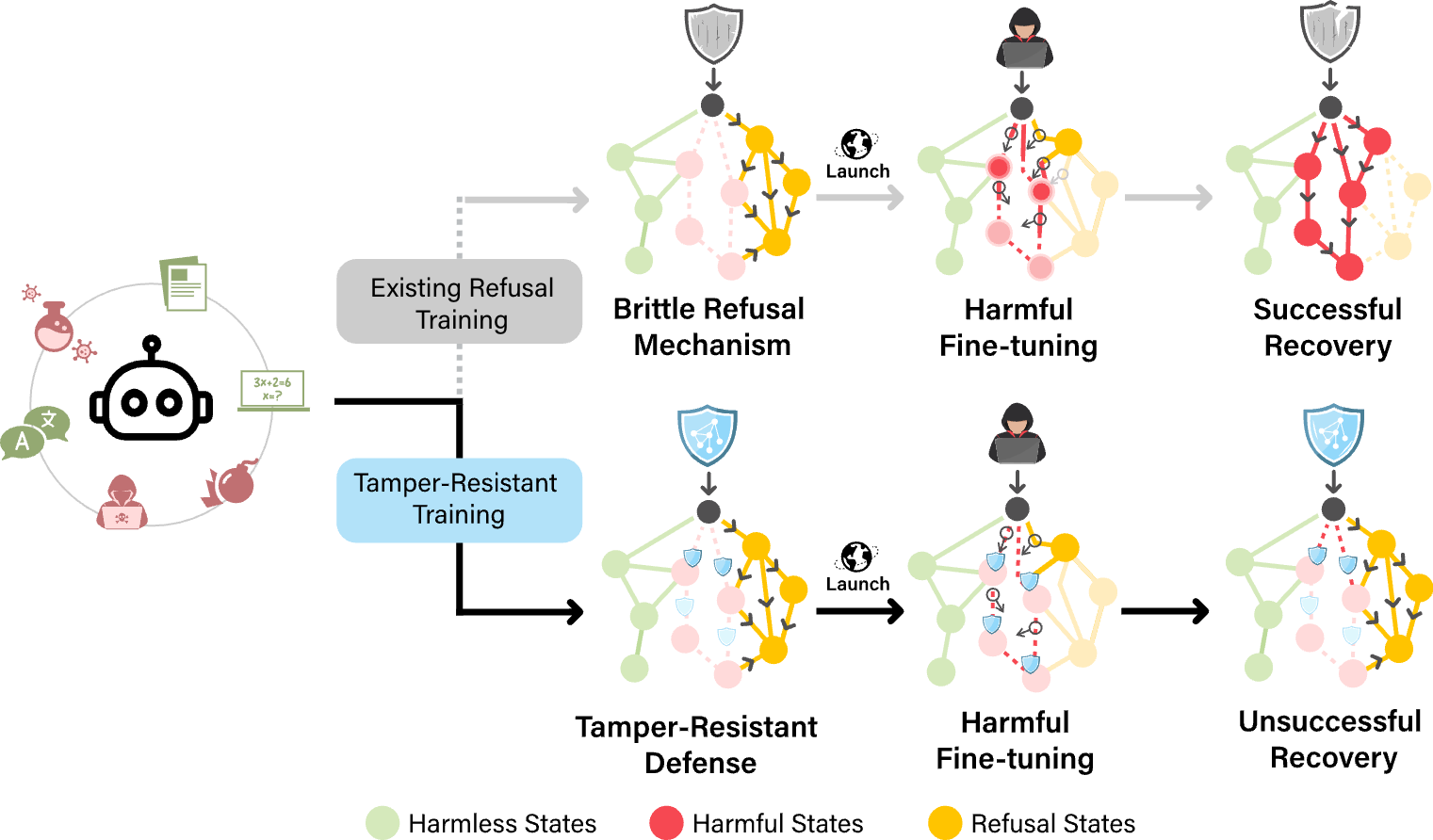
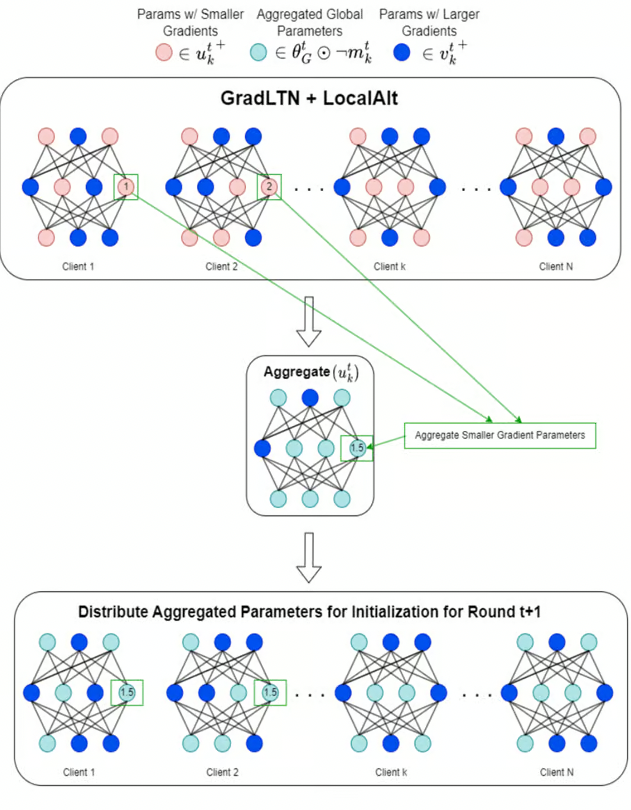
    Thinking Machines’ Safety Research Grants highlight tamper-resistant safety training, citing my work on Tamper-Resistant Safeguards for Open-Weight LLMs.

  2. Aug 3rd, 2026. Research

    Scaling Automated Post-Training

    Intology

    Locus, our autonomous AI research system, plans and runs experiments over multiple days to improve language models after their initial training. On PostTrainBench+, a benchmark for this post-training process, it achieves 51.6%, exceeding the official human-tuned Qwen3-1.7B-Instruct model (49.4%). Also, an LLM fully post-trained by Locus is currently running in enterprise production.
    Abstract spheres — Scaling Automated Post-Training
  3. May 19th, 2026. Research

    NanoGPT-Bench: Can Coding Agents Do Research?

    Intology

    NanoGPT-Bench tests whether AI coding agents can discover ways to train GPT-2 faster, using a fixed computing budget. Given 512 hours of H100 GPU compute, existing SWE coding agents reproduce just 9.3% of the training-speed improvement achieved by human researchers over five months.

    Branching roots — NanoGPT-Bench
  4. Nov 19th, 2025. Research

    Previewing Locus

    Intology

    We introduce Locus, our autonomous AI research system, which plans, runs, and learns from experiments over multiple days. In a continuous 64-hour run on RE-Bench, a suite of AI research tasks, it scores 1.30 against the human-expert baseline of 1.27. It also earns medals in 77% of the machine-learning competitions in MLE-Bench Lite.

    Bridge artwork — Previewing Locus
  5. Sep 12th, 2025. News

    I'll be joining Intology to work on scaling autonomous AI research.

  6. Feb 11th, 2025. Publication
  7. Aug 2nd, 2024. News

    Our work on Tamper-Resistant Safeguards is featured in Wired. article.

  8. Aug 1st, 2024. Publication
  9. May 20th, 2024. News

    I'll be joining the Center for AI Safety as a Research Engineer Intern.

  10. Apr 3rd, 2024. Publication
  11. March 5th, 2024. Publication

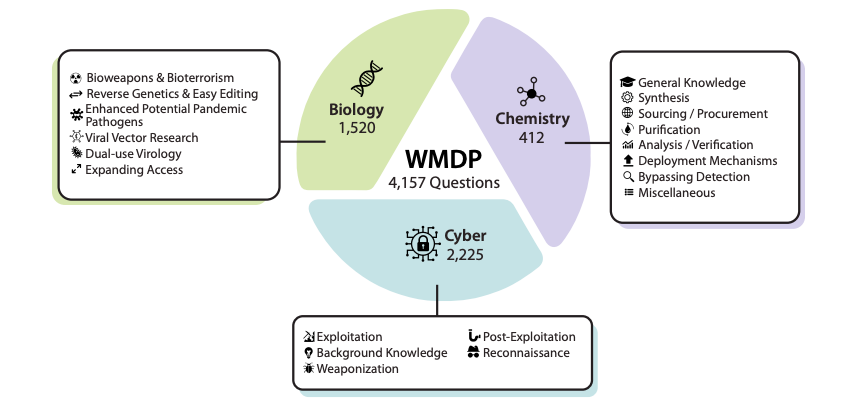
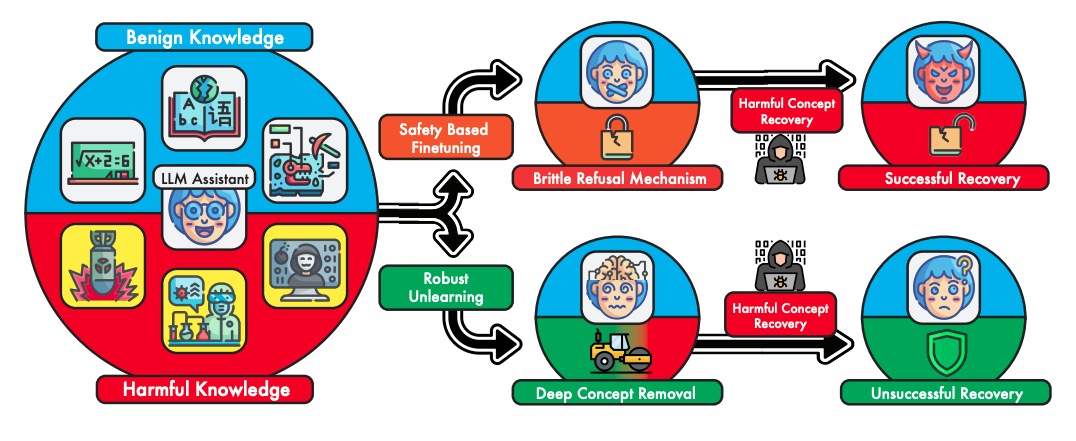
    The WMDP Benchmark: Measuring and Reducing Malicious Use With Unlearning

    Nathaniel Li*, Alexander Pan*, Anjali Gopal, Summer Yue, Daniel Berrios, Alice Gatti, Justin D. Li, Ann-Kathrin Dombrowski, Shashwat Goel, Long Phan, Gabriel Mukobi, Nathan Helm-Burger, Rassin Lababidi, Lennart Justen, Andrew B. Liu, Michael Chen, Isabelle Barrass, Oliver Zhang, Xiaoyuan Zhu, Rishub Tamirisa, Bhrugu Bharathi, Adam Khoja, Ariel Herbert-Voss, Cort B. Breuer, Andy Zou, Mantas Mazeika, Zifan Wang, Palash Oswal, Weiran Liu, Adam A. Hunt, Justin Tienken-Harder, Kevin Y. Shih, Kemper Talley, John Guan, Russell Kaplan, Ian Steneker, David Campbell, Brad Jokubaitis, Alex Levinson, Jean Wang, William Qian, Kallol Krishna Karmakar, Steven Basart, Stephen Fitz, Mindy Levine, Ponnurangam Kumaraguru, Uday Tupakula, Vijay Varadharajan, Yan Shoshitaishvili, Jimmy Ba, Kevin M. Esvelt, Alexandr Wang, Dan Hendrycks

    The WMDP Benchmark: Measuring and Reducing Malicious Use With Unlearning — research overview
  12. March 5th, 2024. News

    WMDP is featured in TIME. article.

  13. March 3rd, 2024. Publication
  14. February 13th, 2024. News

    Announcing our $6M seed round and the launch of Mindy. article.

  15. October 12th, 2023. News

    I gave a talk internally at Google Research. post.

  16. June 23rd, 2023. Publication